
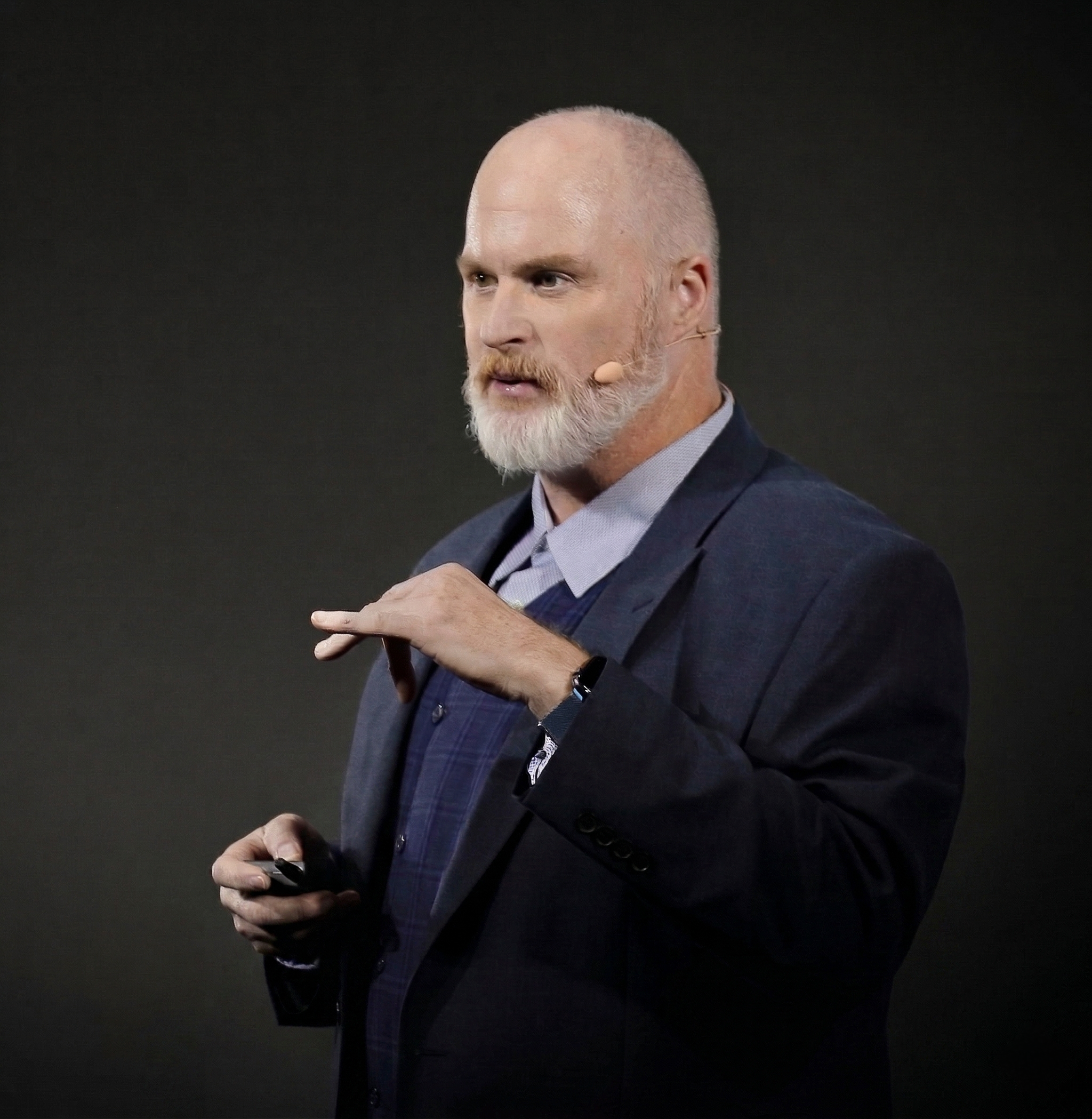
Darren Nerland is the founder of Skills Leap, a Seattle-based consulting firm helping organizations navigate the intersection of leadership, skills strategy, and AI partnership. He created and runs Learnapalooza, a senior enterprise L&D conference now in its eighth year, bringing together CHROs, CLOs, and learning leaders from organizations across the Pacific Northwest and beyond.
Before launching Skills Leap, Darren held senior roles at some of the world's most influential organizations. At Amazon, he led work in robotics, operations, and global leadership and talent development. At Microsoft, he contributed to large-scale learning and capability initiatives. At Degreed, he helped shape the future of the skills-based learning ecosystem. At the Bill & Melinda Gates Foundation, he applied his expertise to education and workforce impact at a global scale.
Darren's consulting frameworks are built for practitioners, not academics. The Foresight-to-Capability Operating Model (Orient, Align, Enable) gives organizations a structured path from workforce signals to deployed capability. The Leadership Navigator maps eight Compass Points to help leaders develop across self, teams, diversity, innovation, AI partnership, foresight, data storytelling, and beyond. The Signal-to-Skill Operating Loop connects labor market intelligence to skills architecture in real time.
He speaks regularly at industry events on the future of work, skills-based organizations, and what it actually takes to build AI partnerships that stick. His message is grounded, direct, and built from years inside some of the most demanding talent environments in the world. Darren is based in the Seattle, WA area and works with enterprise clients across North America and globally.
The skills gap is real. But the data behind most workforce strategies is not. Organizations are classifying jobs by job titles, mapping competencies that are already obsolete, and building learning ecosystems disconnected from actual work. In this keynote, Darren breaks down why skills mapping fails, what real workforce intelligence looks like, and how to build a Signal-to-Skill Operating Loop that connects labor market signals to learning delivery. Practical. Uncomfortable. And exactly what most L&D leaders need to hear.
The headlines say AI is coming for the workforce. The data says something more interesting. According to the WEF Future of Jobs Report 2025, 170 million new roles will be created by 2030, and the fastest-growing skills are not just technical. They are human. Creative thinking. Resilience. Leadership. Social influence. Around 66% of all tasks will still require human skill or human-AI collaboration. The organizations that win will not be the ones who automated fastest. They will be the ones who built human capability deliberately and early. This keynote makes the data human. And gives leaders a framework to act on it.
The rules of leadership changed. Most leaders are still playing by the old ones. They were built for predictable organizations, clear hierarchies, and problems that stayed put. That world is over. This keynote introduces the Leadership Navigator and its 8 Compass Points, a framework for developing leaders across the dimensions that actually matter now: self-awareness, team dynamics, inclusive decision-making, innovation, AI partnership, workforce foresight, data storytelling, and leading beyond the role. Practical. Honest. Built for the leaders sitting in the room, not the ones in the case study.
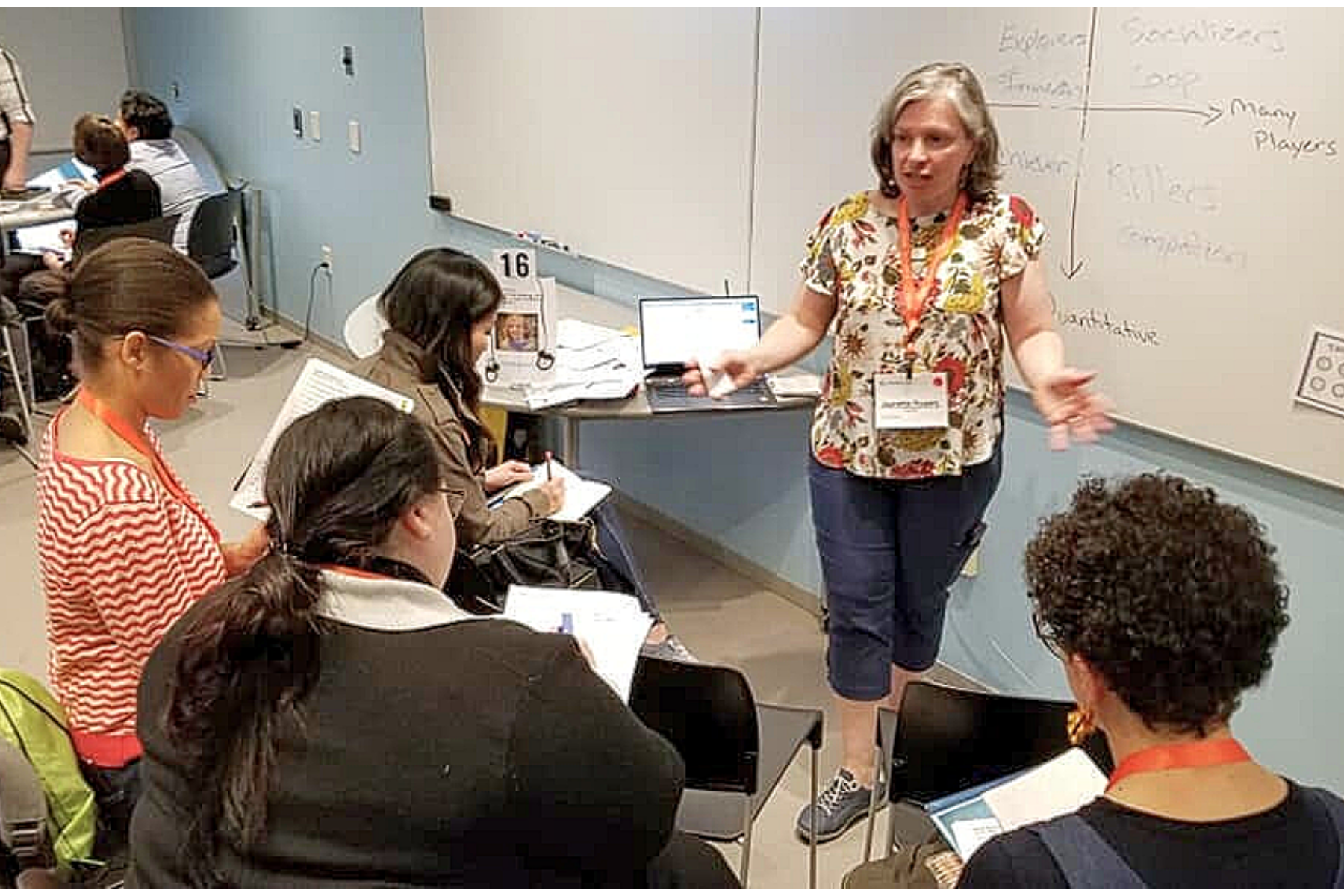
Jeanette is the founder of Geek Speak Translator, a practice that helps organizations use AI as a thinking partner, not a replacement. Drawing on decades of consulting experience, including work with Microsoft and the Gates Foundation, she helps teams navigate AI and digital change and turn strategy into practical use.
Her work focuses on a simple idea: most organizational failures are not caused by the technology itself, but by how people understand, interpret, and apply it. In a time when organizations are under pressure to adopt AI quickly, Jeanette helps leaders slow down just enough to ask better questions, make better decisions, and create more thoughtful approaches to change.
With a background in leadership development, learning design, and organizational change, she has spent years helping teams move beyond surface-level adoption and toward real-world application. She is especially interested in the space between intention and execution: where new tools are introduced, expectations shift, and people are asked to work differently before they fully understand what that means.
Jeanette helps leaders and teams make sense of complex technology in plain language so they can adopt new tools, shift ways of working, and move forward with greater confidence and practical action. Her work bridges business, human, and technology perspectives, helping organizations reduce confusion, strengthen judgment, and use AI in ways that support better thinking rather than replace it.
Through consulting, teaching, writing, and content creation, Jeanette helps people use AI in ways that improve how they think, decide, and work. She is known for making complex ideas understandable without oversimplifying them, and for bringing a grounded, human-centered perspective to conversations about AI, leadership, and change.
Smart teams fail more often than they should. Not because they lack skill, effort, or intent but because of the breakdown that happens in translation across the organization. Leaders define strategy in business terms. Technical teams implement in system logic. Employees experience it through daily work. Each layer makes sense on its own, but the meaning doesn't carry across. What starts as a clear decision at the top becomes fragmented, reinterpreted, and sometimes unrecognizable in practice.
Jeanette breaks down how translation gaps form between tech-speak, business-speak, and people-speak, and why those gaps quietly drive resistance, rework, and stalled change. She introduces a simple translation loop that helps leaders surface misalignment early, make intent visible, and move work forward without adding more process. Practical. Familiar. And often the missing piece in AI and digital change.
Most organizations say they're "implementing AI." Few can clearly answer what problem it's meant to solve. Instead, AI gets layered onto existing workflows, decisions, and assumptions, often without revisiting whether those should exist in the first place. The result is faster outputs, but not necessarily better outcomes.
Jeanette challenges the idea that AI itself is the strategy. She shows how organizations default to tool adoption instead of decision clarity, and why that leads to scattered use cases, uneven adoption, and limited impact. She introduces a simple decision-first approach to AI: start with what needs to improve (thinking, decisions, or execution) and then determine where AI actually fits. The focus shifts from "where can we use AI?" to "where does AI meaningfully improve how we work?" Grounded. Practical. And a reset many organizations need.
Most change initiatives don't fail because the strategy is wrong. They fail because the meaning of the change never fully carries across the organization. What leaders communicate as clear intent gets reinterpreted through roles, incentives, language, and lived experience. Teams hear the same message, but not the same meaning.
Jeanette breaks down the four translation failures that quietly derail change: Strategy-to-Execution Loss (vision never becomes behavior), Jargon Drift (shared words take on different meanings), Invisible Labor Creation (new work appears without acknowledgment or support), and Emotional Mistranslation (fear and uncertainty are labeled as resistance instead of signal). These failures don't look dramatic. They show up as partial adoption, slow progress, and misalignment that compounds over time.
Jeanette introduces a practical way to surface and address these translation gaps early so change efforts don't just launch, but actually take hold. Direct. Practical. And immediately recognizable in most organizations.